
How Sleep Improves Workout Recovery
How Sleep Improves Workout Recovery
You do not get stronger during your workout — you get stronger recovering from it. Sleep is when your body answers the stimulus: repairing muscle fibers, rebalancing hormones, and restoring the nervous system. Skimp on sleep and you are leaving a large part of every workout's benefit on the table. Here is what happens overnight, what short sleep costs your performance, and how to wind down properly on training days.
VivPulse is reader-supported. When you buy through links on our site, we may earn an affiliate commission.
Your Muscles Repair While You Sleep
Hard training creates microscopic damage in muscle fibers — that is normal, and it is the trigger for growth. The repair process, called muscle protein synthesis, ramps up in the hours after training and continues overnight. Sleep researchers note that the deep, slow-wave stage of sleep is when physical restoration peaks: blood flow to muscles increases and repair systems run at full capacity.
Deep Sleep and Growth Hormone
Growth hormone plays a central role in tissue repair and recovery, and the body releases it in pulses — with the largest pulses occurring during deep sleep early in the night. This is why the first few hours of sleep are especially valuable for anyone who trains. Keeping a consistent schedule and a dark, cool bedroom (see the complete guide to better sleep) directly protects that window.
What Sleep Deprivation Does to Performance
The costs of short sleep show up quickly:
- Perceived effort rises — the same workout feels harder, so you quit earlier or lift lighter.
- Reaction time and coordination drop — bad news for sports, and it raises injury risk in the gym.
- Recovery slows — short sleep is linked with higher muscle soreness and slower bounce-back between sessions.
- Motivation dips — tired brains skip workouts, and consistency is the engine of progress.
If you train regularly, treat 7–9 hours of sleep as part of the program — not as optional rest, but as a training variable on par with sets and reps. Our post-workout recovery guide covers the full recovery picture, from nutrition to soreness management.
Wind-Down Tools for Training Days
After hard sessions, your nervous system is still wired — a short wind-down routine bridges the gap between training mode and sleep mode. Two tools that earn their place:
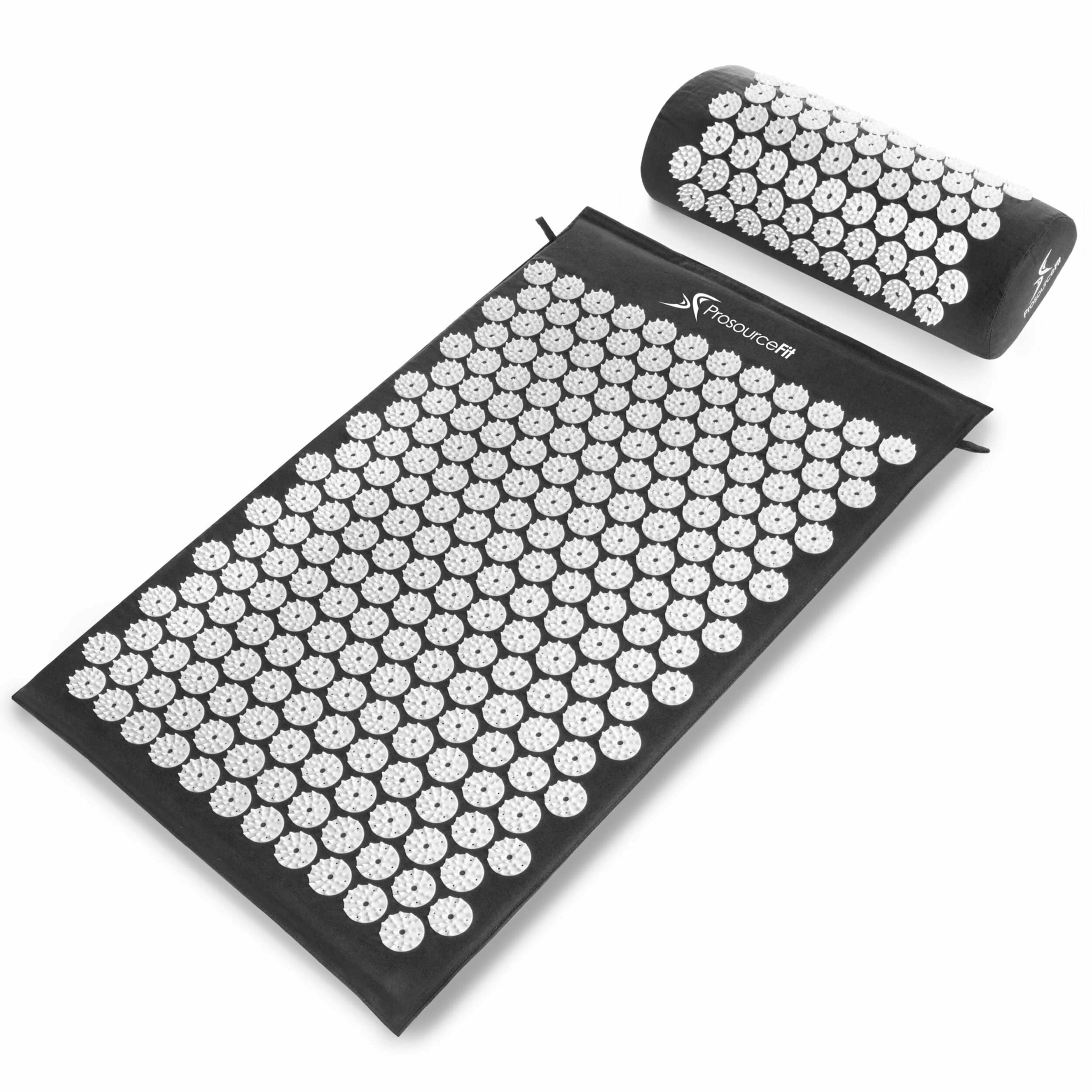
- An acupressure mat session — lying on an acupressure mat for 15–20 minutes encourages full-body relaxation and helps you shift gears. The ProsourceFit Acupressure Mat and Pillow Set ($25.59) includes a pillow for neck and upper-back tension — an easy, screen-free way to start the evening wind-down.
- A massage gun for tight spots — a few minutes of percussion on sore quads, calves, or shoulders eases the tightness that can keep you tossing. The Renpho heat and cold massage gun ($99.98) adds adjustable heat and cold therapy to deep-tissue percussion, so you can target exactly what aches. For guidance on temperature therapy, see our article on heat vs. cold therapy for muscle recovery.
Finish with the basics: dim lights and a bedroom set up for sleep. Recovery is a system — training, nutrition, relaxation tools, and sleep all pull in the same direction.
Frequently Asked Questions
How much sleep do athletes need?
At least the standard 7–9 hours, and more during heavy training blocks. If soreness lingers and performance stalls, adding an hour of sleep is often more effective than adding a supplement.
Should I train if I slept badly?
One bad night is not a reason to skip, but dial it back: lighter weights, lower volume, or easy cardio instead of a max-effort day.
Can a massage gun help me sleep better?
Indirectly, yes. It does not make you drowsy, but easing muscle tightness and soreness in the evening removes a common barrier to falling asleep. Pair it with a dark, quiet bedroom for the full effect.
Is an acupressure mat safe to use every day?
For most healthy adults, daily 15–20 minute sessions are fine. Start with a thin shirt between you and the mat, and skip it over broken skin. If you have a medical condition, check with your doctor first.