Do White Noise Machines Really Work?
Do White Noise Machines Really Work?
If you have ever fallen asleep instantly in a hotel room but tossed and turned at home, you have experienced the power of steady background sound. White noise machines promise exactly that: a consistent sonic blanket that masks the sounds that wake you up. Here is what the different "colors" of noise are, what the research suggests, and why the type of machine matters.
VivPulse is reader-supported. When you buy through links on our site, we may earn an affiliate commission.
What Is White Noise, Anyway?
"White noise" is sound that contains all audible frequencies at roughly equal intensity — think TV static or a fan hum. The family has a few cousins you will see on every machine:
- White noise — bright and hissy; great at masking sharp sounds like voices or car alarms.
- Pink noise — deeper and softer, with more low-frequency energy; sounds like steady rain or wind.
- Brown noise — even deeper, like a low rumble or a distant waterfall.
The underlying principle is the same for all three: a continuous sound raises the background "floor," so sudden noises — a car horn, a dog barking — do not spike through it. Sleep researchers generally agree that it is the unpredictability of sounds, not the volume, that wakes us up.
What Does the Research Suggest?
Several studies have linked steady background noise with falling asleep faster and waking less often, particularly for light sleepers and in noisy urban environments. The evidence base is still modest, and no machine replaces a good schedule and a dark, cool room — but as part of a complete sleep setup (see the complete guide to better sleep), consistent sound masking is one of the simplest upgrades you can make.
Fan-Based vs. Digital: Why It Matters
There are two ways to make white noise:
- Digital loops — a recorded sound that repeats on a loop. Cheap and flexible, but some sleepers' brains catch the loop point, which can itself become distracting.
- Real fan-based machines — an actual fan generates the sound physically, so it never repeats and sounds completely natural.
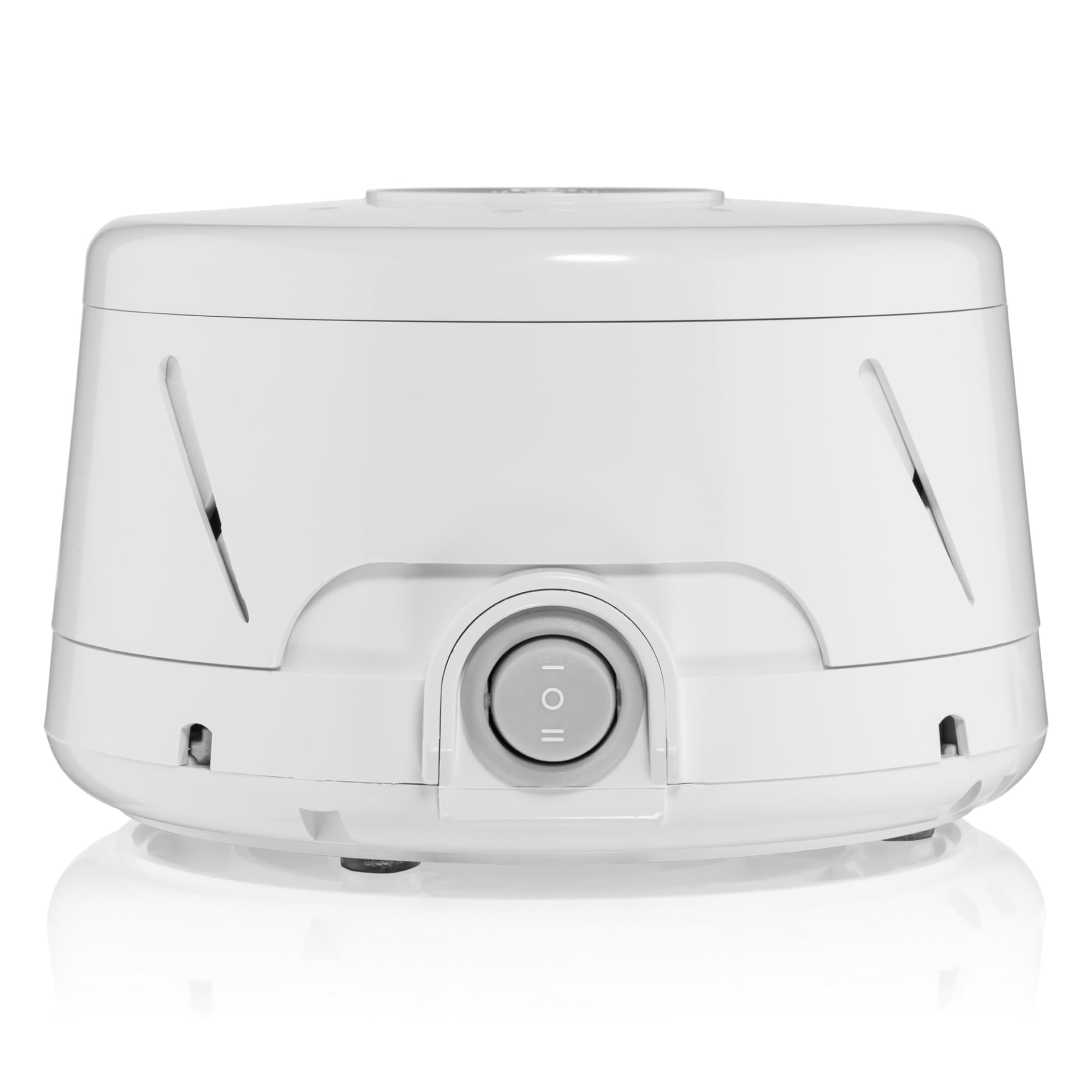
This is where the Yogasleep Dohm Classic stands out. Instead of playing a recording, it creates its signature sound with a real internal fan — soothing, natural, and completely loop-free. Two speeds and an adjustable tone let you tune the sound to your room. As the original white noise sound machine, it has a long track record for sleep therapy for both adults and babies. At $96.69, it is a purchase that pays off every single night.
How to Use One Effectively
- Place it strategically — put the machine between you and the noise source (near a window facing traffic), not right next to your head.
- Keep the volume modest — about the level of a quiet conversation. It should mask intrusions, not blast them away.
- Give it a few nights — most sleepers adjust within three to four.
Noise is only one piece of the puzzle. Pair sound masking with darkness, cool air, and the right pillow — our sleep environment checklist walks through all five elements.
Frequently Asked Questions
Can white noise damage my hearing?
At reasonable volumes, no. Keep the machine at about the level of a quiet conversation and place it a few feet away rather than directly by your ear.
White, pink, or brown — which is best?
It comes down to preference. Many people find pink and brown noise more pleasant because they emphasize lower frequencies, while white noise is best at masking sharp, high-pitched sounds. Try each for a few nights and see which you fall asleep to fastest.
Can I use a white noise machine for my baby?
Many parents do — the Dohm is designed for sleep therapy for adults and babies alike. Keep the volume low, place the machine away from the crib rather than right next to it, and choose the lowest effective setting.
Is a fan-based machine really better than a loop?
For sensitive sleepers, often yes. A physical fan cannot loop, so there is no repeating pattern for your brain to latch onto — just continuous, natural sound.