
The Perfect Sleep Environment Checklist
The Perfect Sleep Environment Checklist
You can have the best sleep schedule in the world and still sleep poorly in the wrong room. Light, temperature, noise, bedding, and air quality all send signals to your brain — and when they disagree, sleep fragments. Run through this five-part checklist and upgrade the weak spots. Most fixes are cheap, and the payoff shows up on the very first night.
VivPulse is reader-supported. When you buy through links on our site, we may earn an affiliate commission.
1. Darkness: Make It Cave-Like
Light is the strongest signal that sets your circadian rhythm, and even dim light can suppress melatonin — the hormone that tells your body it is time to sleep. Aim for genuine darkness:
- Install blackout curtains or quality blackout blinds if streetlights or sunrise leak in.
- Cover or remove small light sources: chargers, standby LEDs, a bright alarm clock.
- Keep a comfortable sleep mask on the nightstand as a backup for travel or imperfect rooms.
2. Temperature: Keep It Cool
Your core body temperature needs to drop for sleep to begin, and a cool room helps it happen. Sleep researchers typically point to roughly 65–68°F (18–20°C) as the sweet spot:
- Set the thermostat a few degrees lower at night than during the day.
- Choose breathable bedding — cotton or linen rather than heavy synthetics — so you do not overheat mid-night.
3. Noise: Control the Soundscape
It is not volume that wakes you — it is change. A steady hum is fine; a sudden bark is not. The fix is masking: raise the background floor so intrusions cannot spike through it:
- Use a white noise machine on a low, steady setting every night. The Yogasleep Dohm Classic ($96.69) generates its sound with a real internal fan rather than a digital loop, so the sound never repeats — ideal for masking traffic, thin walls, and snoring partners.
- Place the machine between you and the noise source, at about the volume of a quiet conversation.
- If you prefer earplugs, most sleepers find steady background sound less intrusive — our full breakdown explains whether white noise machines really work.
4. Bedding: Your Pillow Matters More Than You Think
You spend roughly a third of your life on your pillow, and it has one job: keeping your cervical spine aligned. Wake up with a stiff neck or tension headaches often enough, and the pillow is the first suspect:
- Match pillow height to your sleep position — side sleepers need more loft than back sleepers.
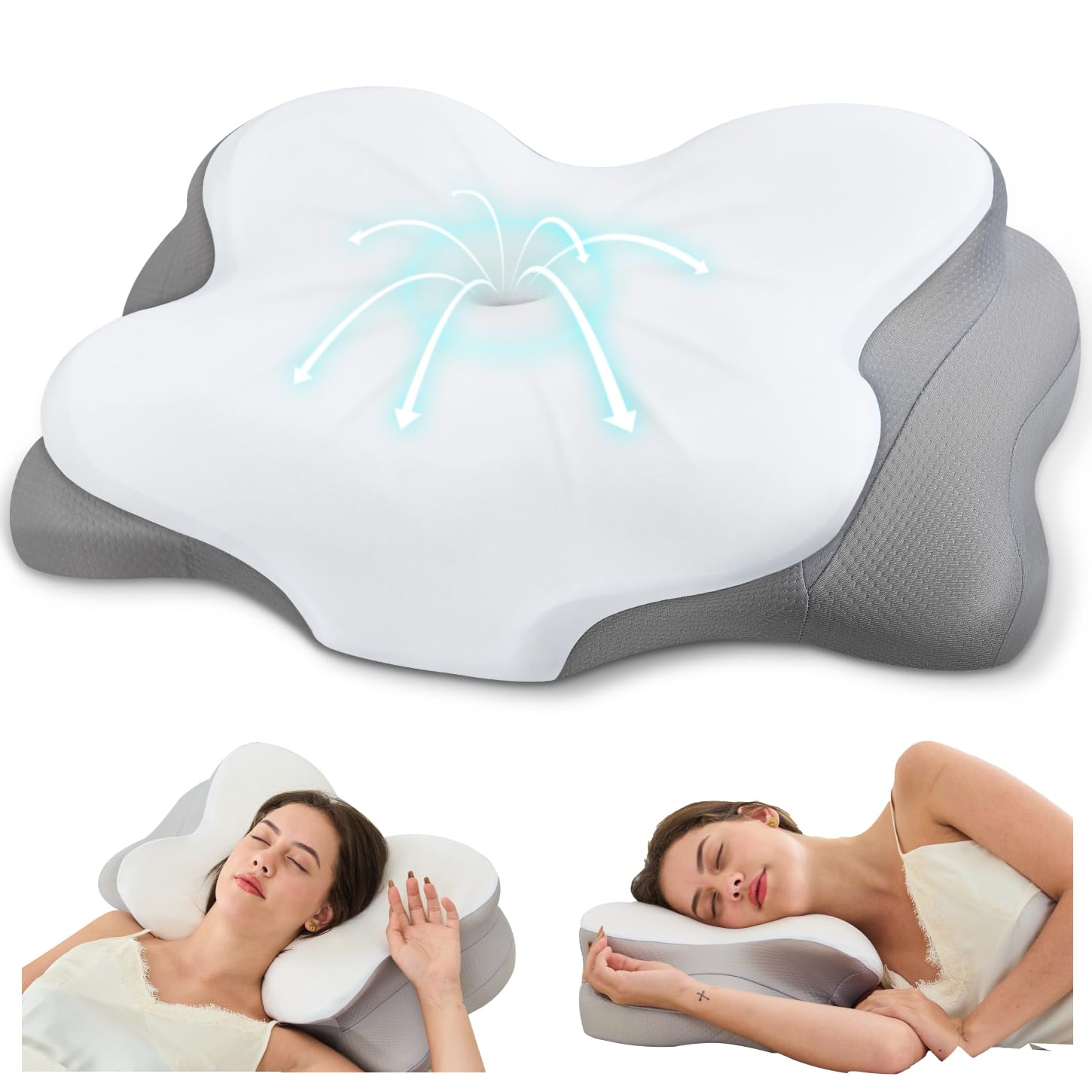
- A cervical-contour design supports the natural curve of your neck. The Supportive memory foam cervical pillow ($56.99) uses a dual-height design so both back and side sleepers can find their alignment, with memory foam that holds its shape night after night.
- Replace pillows every 1–2 years — a flattened, lumpy pillow is quietly ruining your mornings.
5. Air Quality: Fresh Air, Easy Breathing
Stuffy, dry air leads to congestion and restless sleep, especially in winter with the heating on:
- Ventilate the bedroom briefly in the evening, or crack a window if the street is quiet.
- In dry climates, a small humidifier keeps nasal passages comfortable.
- Wash sheets weekly — dust buildup aggravates allergies and congestion.
For the schedule, wind-down routine, and sleep science behind all of this, start with the complete guide to better sleep.
Frequently Asked Questions
What is the most important factor in the sleep environment?
Darkness probably edges out the rest — light directly controls melatonin, the main sleep signal. But the factors multiply: a dark, cool, quiet room beats optimizing any single one.
Should I sleep with a fan or a white noise machine?
Both work by masking. A fan adds airflow (useful in warm rooms); a dedicated machine like the Yogasleep Dohm Classic gives you adjustable, loop-free sound without the draft.
How cool should my bedroom be, really?
Around 65–68°F (18–20°C) is the commonly cited range — adjust a degree or two for personal comfort.
How often should I replace my pillow?
Every 1–2 years for foam pillows. If it has lost its shape, smells musty, or you wake up sore, it is overdue.